
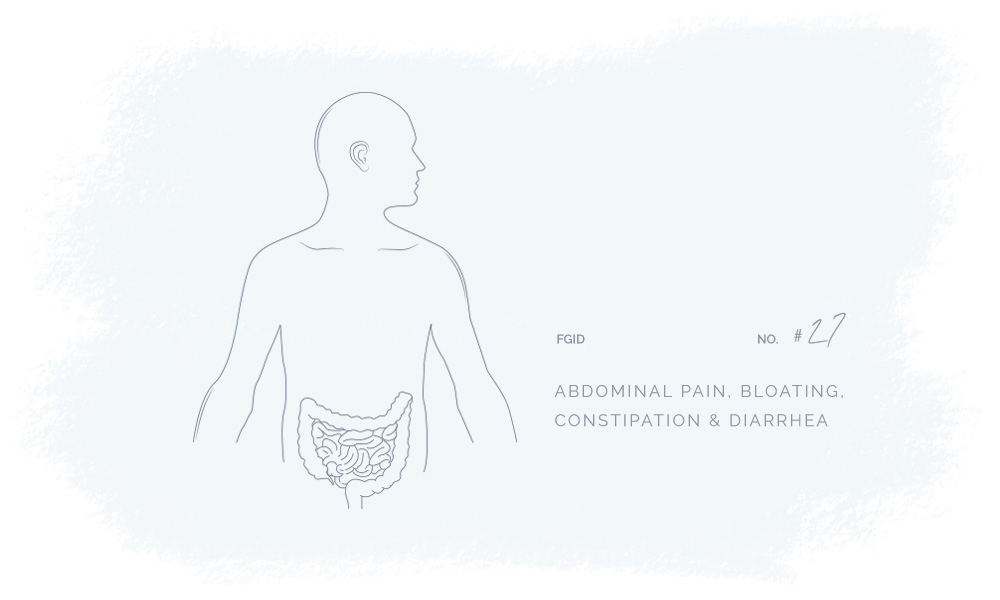
Functional Gastrointestinal Disorders
Digestive
What is FGID
Functional Gastrointestinal Disorders (FGID) are a common group of gastrointestinal disorders that lead to abdominal pain, bloating, constipation, diarrhea, etc.
It is a complex but common group of diseases that interfere with everyday activities and quality of life as the symptoms can be severe.
Symptoms
Symptoms of FGID can vary to a great extent. The most common symptoms are:
- Feeling exceptionally full after a meal
- Little appetite/feeling full too quickly
- Epigastric pain or burning – discomfort right below the ribs
Cause
Most commonly, morphologic and physiological abnormalities are used to diagnose FGIDs. These abnormalities can include a combination of motility disturbance, visceral hypersensitivity, altered mucosal and immune function, altered gut microbiota, and altered central nervous system processing.
FGID Symptoms
Reduced appetite, feeling exceptionally full (often wuickly) after a meal and epigastric pain/burning right below the ribs.
Therapeutic Potential
Preclinical data suggests CBD and THC among other cannabinoids may be therapeutic for FGID.
Application options
Depending on your needs, the optimal type of application may vary. Find more information on our application options.
The connection between Cannabinoids & Functional Gastro-Intestinal Disorders
Studies find that CBD and THC may have great therapeutic potential and may be used to help treat FGID. CBD and THC are well-known cannabinoids, however, they do not have the same psychoactive effects. THC is psychoactive while CBD does not possess psychoactive effects. According to WHO guidelines, the cannabidiol CBD is generally well tolerated with a good safety profile.
Preclinical evidence proposes that the cannabinoids THC, CBD, CBG, and THCV may be therapeutic in the treatment of functional gastrointestinal disorders as the endocannabinoid system may be involved in the function of the gastrointestinal tract and the regulation of bowel movement.

Literature Discussion
The literature discussion is an overview of the published results from scientific studies investigating if and how cannabinoids can be beneficial in the treatment of FGID. The overview will be updated regularly to ensure the newest and most accurate information.
Endocannabinoids may play a role in in the central nervous systems
intracerebrovascular application of anandamide and 2AG may exhibit gastroprotective effects in ethanol-induced ulcers, proposing that endocannabinoids play a role in the central nervous system.
Cannabinoid receptors may be involved in pain and inflammation treatment
TRP receptors (TRPV1-4, TRPA1, TRPM8) are involved in pain sensation but may also play a role in inflammation. It was shown that there is an interaction between TRPs and cannabinoids (endo and phytocannabinoids) with varying affinities. This means that TRPs can be excellent targets and plant cannabinoids excellent substrates to manage pain and inflammation.
Cannabinoids may be beneficial in intestinal inflammation
Cannabinoids like THCV, CBD, and CBG were shown to exhibit anti-inflammatory activities in experimental intestinal inflammation.
In the TNBS mouse model of colitis, colitis was observed to be attenuated by CBD (5 mg/kg i.p. twice daily for three days). Furthermore, the same cannabinoid was found to promote endothelial, and epithelial wound healing.
Clinical Trials
Clinical trials are research studies that examine new treatments and evaluate their effects on human health outcomes.
Inhalation of cannabinoids may be beneficial in treatment
In a 13-patient trial, weight, the perception of general health, and the ability to perform daily tasks were increased when using inhaled cannabis.
Cannabinoids & Receptors
Below you find the plant cannabinoids, cannabinoid receptors, and endocannabinoids that are associated with the potential therapy.
CBD
Cannabidiol (CBD) is a dominant cannabinoid in hemp. CBD does not possess psychoactive effects and does not make people high. CBD has been demonstrated to have potential as an alternative for several health-related conditions, including anxiety, pain, depression, among others.
THC
Tetrahydrocannabinol (THC) is a cannabinoid found in the cannabis plant. THC possesses psychoactive properties.
CB2
Cannabinoid receptors are located on the surface of cells in your body and they “listen” to conditions outside the cell. CB2 receptors are key players in the ECS. CB2 receptors are more abundant outside the nervous system, including cells of the immune system.
If you have any further information relevant to the connection between FGID and cannabinoids or find any of the information inaccurate, outdated or incomplete please contact us here