
Inflammation
Inflammatory
What is Inflammation
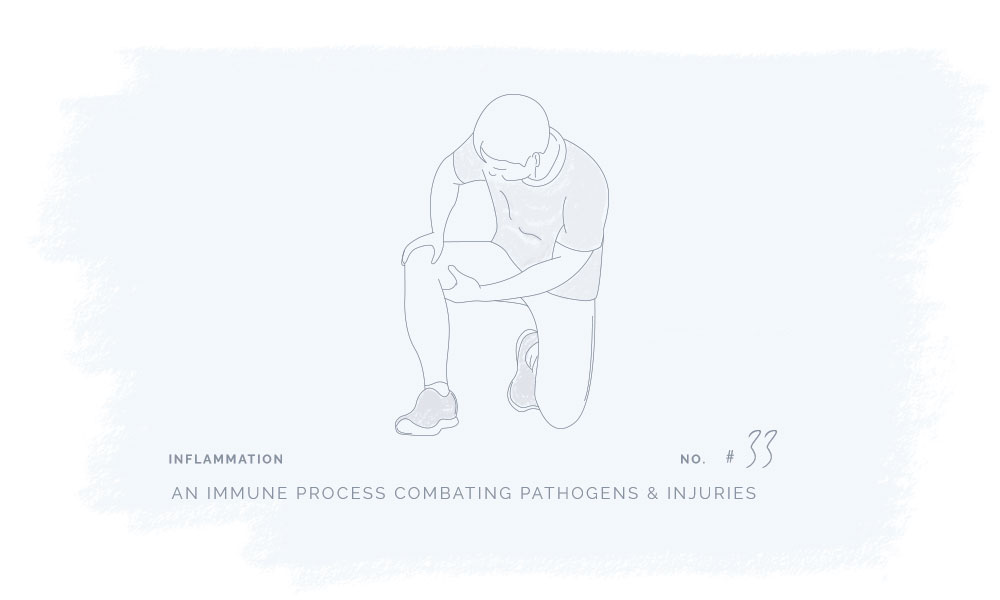
Inflammation is an immune process involved in the body combating harmful situations such as pathogens and injuries. However, the body can mistakenly perceive its own cells and tissue as harmful, causing autoimmune inflammatory diseases.
Symptoms
Acute symptoms of inflammation in the affected area of the body may include:
- Pain
- Redness
- Loss of movement and function
- Swelling
- Increased heat
Cause
Inflammation occurs when the body becomes exposed to an infection or injury. When the body detects damage or pathogens, our immune system uses defense mechanisms to combat harmful situations. Plasma proteins are accumulated by tissues, resulting in a buildup of fluid that leads to swelling. The immune cells release neutrophils (i.e. white blood cells), which are the first line of immune defense against pathogens. Neutrophils migrate towards the affected area and they contain molecules that can help combat foreign intruders. The affected area can be more easily reached by leukocytes and plasma proteins when small blood vessels enlarge.
Inflammation Symptoms
Pain, redness, swelling, loss of movement/function, and increased heat in the affected areas among others.
Therapeutic Potential
Preclinical data suggests CBD and THC among other cannabinoids may be therapeutic for Inflammation.
Application options
Depending on your needs, the optimal type of application may vary. Find more information on our application options.
The connection between Cannabinoids & Inflammation
Studies find that CBD and THC may have great therapeutic potential and may be used to help treat Inflammation. CBD and THC are well-known cannabinoids, however, they do not have the same psychoactive effects. THC is psychoactive while CBD does not possess psychoactive effects. According to WHO guidelines, the cannabidiol CBD is generally well tolerated with a good safety profile.
It is observed that one of the primary functions of the endocannabinoid system is to balance inflammation in the body, suggesting that cannabinoids may be used as therapeutics in the treatment of inflammation. Preclinical research proposes that the cannabinoid CBD and to a smaller extent, THC may be effective in the treatment of inflammation. Furthermore, some research showed that CB2 is a leading receptor in controlling inflammation, but other receptors play a role as well.
In addition, the CB2 receptor is found in immune cells suggesting that cannabinoids play an important role in the regulation of the immune system and thereby inflammation.
Literature Discussion
The literature discussion is an overview of the published results from scientific studies investigating if and how cannabinoids can be beneficial in the treatment of Inflammation. The overview will be updated regularly to ensure the newest and most accurate information.
CBD may reduce total leukocyte and suppress immunity
In rats, a significant decrease in total leukocyte number and a significant fall in total numbers of T, B, and both T helper and T cytotoxic lymphocyte subsets were caused by repeated administration of CBD (IP) at a dose of 5 mg/kg.
The total numbers of NK and NKT cells that are involved in the primary, nonspecific antiviral, and antitumor immune response were not affected by this immunosuppressive effect. In contrast, the total and percentage of NKT cell numbers, and the percentage number of NK cells were shown to be increased by CBD administration. These findings indicate that repeated treatment with CBD suppresses specific immunity through decreasing T, B, T cytotoxic, and T helper cell numbers. Also, nonspecific antiviral and antitumor immune responses related to NK and NKT cells may be increased upon repeated treatment with CBD.
CBD may have therapeutic potential by blocking receptor GPR55
GPR55, receptors are expressed by human Macrophage. Stimulation of GPR55 in human macrophages can enhance lipid accumulation, block cholesterol efflux, and exhibit pro-inflammatory and pro-atherogenic properties. CBD can counteract these effects by blocking GPR55, proposing that CBD may be used as therapeutic potential.
In the mouse Collagen model of arthritis, inflammation was suppressed by CBD in a dose-dependent manner.
Clinical Trials
Clinical trials are research studies that examine new treatments and evaluate their effects on human health outcomes.
Today, we are not able to provide any clinical trials about cannabinoids and Inflammation.
Cannabinoids & Receptors
Below you find the plant cannabinoids, cannabinoid receptors, and endocannabinoids that are associated with the potential therapy.
CBD
Cannabidiol (CBD) is a dominant cannabinoid in hemp. CBD does not possess psychoactive effects and does not make people high. CBD has been demonstrated to have potential as an alternative for several health-related conditions, including anxiety, pain, depression, among others.
THC
Tetrahydrocannabinol (THC) is a cannabinoid found in the cannabis plant. THC possesses psychoactive properties.
CB2
Cannabinoid receptors are located on the surface of cells in your body and they “listen” to conditions outside the cell. CB2 receptors are key players in the ECS. CB2 receptors are more abundant outside the nervous system, including cells of the immune system.
If you have any further information relevant to the connection between Inflammation and cannabinoids or find any of the information inaccurate, outdated or incomplete please contact us here
References
- https://www.ncbi.nlm.nih.gov/pmc/articles/PMC2828614/
- Ignatowska-Jankowska, B., Et Al., (2009). ” Cannabidiol-induced lymphopenia does not involve NKT and NK cells”. https://pubmed.ncbi.nlm.nih.gov/19996489/
- Lanuti, M., Et Al., (2015). ” Activation of GPR55 Receptors Exacerbates oxLDL-Induced Lipid Accumulation and Inflammatory Responses, while Reducing Cholesterol Efflux from Human Macrophages”. https://journals.plos.org/plosone/article?id=10.1371/journal.pone.0126839
- Malfait, A.M., Et Al., (2000). ” The nonpsychoactive cannabis constituent cannabidiol is an oral anti-arthritic therapeutic in murine collagen-induced arthritis”. https://pubmed.ncbi.nlm.nih.gov/10920191/